Loading...
Serving Alamo, CA and surrounding areas. (925) 318-8128
Vehicle off the road, blocking a lane, or rolled over on I-680 or a local hillside route? We assess the scene first and use the right rigging to recover your vehicle without causing more damage.
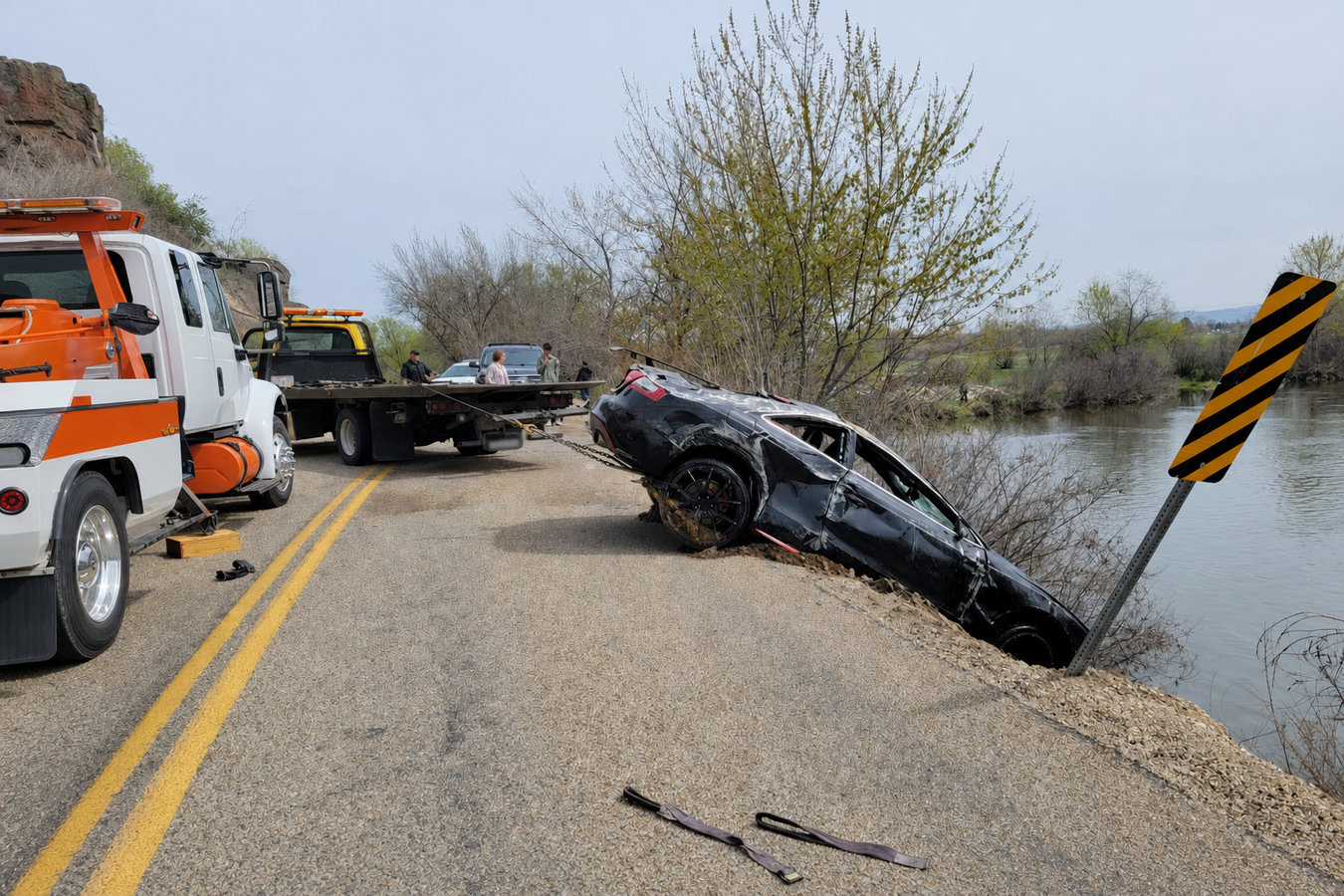
Accident recovery in Alamo, CA is the process of safely removing a vehicle from a crash scene - whether it is spun out on the shoulder, wedged against a barrier, rolled over, or sitting in a ditch off a hillside road - using winches, rigging, and in complex situations, a rotating crane-style boom that can lift and reposition a vehicle from almost any angle, with most straightforward recoveries completed within one to two hours on scene.
A routine tow picks up a car that is simply disabled. Accident recovery deals with a vehicle that may be damaged, unstable, or in a position that makes a standard hookup impossible. The crew has to assess the scene before anything moves - checking for fuel leaks, unstable ground, and traffic hazards - and choose the right approach to protect your vehicle, the crew, and other drivers on the road. Where a vehicle has collided with another or blocked traffic on I-680, the work also involves coordinating with law enforcement to manage the scene safely, which is closely related to the broader emergency towing situations we handle around the clock.
If your vehicle has gone off the pavement on one of the hillside routes near Alamo - Diablo Road, Stone Valley Road - standard access may not be possible. That is when a recovery team with proper winching capability, not a light-duty tow truck, is the right call.
A disabled vehicle in a travel lane on I-680 is a serious safety hazard for your driver and everyone behind them. Do not wait to see if it will restart. Call for recovery immediately so the scene can be cleared before a secondary collision happens.
Roads like Diablo Road and Stone Valley Road near Alamo have steep drop-offs and limited shoulders. If your car has slid into a ditch, embankment, or brush, a standard tow truck likely cannot reach it safely. A recovery team with winching capability is required.
Fuel, oil, or coolant pooling under a vehicle after a crash, or a car perched on uneven ground that could shift, is a dangerous situation. Stay clear and call for professional recovery. Moving an unstable or leaking vehicle without proper equipment can make the situation significantly worse.
A rollover requires specialized rigging to right the vehicle safely without causing additional structural damage. This is not a job for a standard tow hook. A trained recovery team with a heavy-duty boom or rotating crane is the right call, and you need to request it specifically when you call.
Our accident recovery work covers the full range of post-collision vehicle removal in and around Alamo, CA. For vehicles on the I-680 shoulder - whether upright, against a barrier, or blocking lanes - we position the recovery truck to protect the scene, assess quickly, and clear the vehicle with minimal disruption to traffic. When a car has gone off the road on a hillside route, we use winching and rigging to bring it back to the pavement before loading for transport. For rollovers, where the vehicle is on its side or roof, a heavy-duty boom or rotator is used to right it safely before anything else happens. The scene safety steps that apply to all of this work overlap with how we approach wrecker service calls, where vehicle positioning and scene control are just as critical.
Once the vehicle is safely upright and stable, we load it for transport - often on a flatbed so all four wheels are off the ground and nothing is dragging - to the destination you choose. That might be your home, a repair shop of your choice, or a storage facility. If your insurance policy includes towing coverage, many insurers will reimburse the cost or dispatch a preferred provider - it is worth a quick call to your insurer before you pay out of pocket.
Scene clearance on I-680 and Contra Costa County highways for vehicles blocking lanes, on the shoulder, or wedged against barriers.
For vehicles off the pavement on Diablo Road, Stone Valley Road, and other hillside routes where standard access is not possible.
Specialized rigging and heavy-duty boom work to safely right overturned vehicles without causing additional structural damage.
Flatbed transport to your home, a repair shop of your choice, or a storage facility - you choose the destination.
Alamo sits along I-680, one of the busiest commuter corridors in the East Bay, where high-speed rear-end collisions and multi-vehicle incidents are a regular occurrence during morning and evening commute windows. Recovery crews working here manage live freeway traffic while clearing vehicles - a job that requires a crew who knows the safest positioning and can work efficiently under those conditions. The Federal Motor Carrier Safety Administration outlines traffic incident management standards that professional recovery teams follow to keep scenes safe. Drivers in Orinda, CA traveling through this corridor face the same risk on a daily commute.
Beyond the freeway, the roads leading toward Mount Diablo State Park - including Diablo Road and Stone Valley Road - involve steep grades, tight curves, and limited shoulder space. A vehicle that leaves the roadway on these routes can end up on a hillside or in dense brush, where a standard tow truck simply cannot safely reach it. Contra Costa County's dry summers also mean roadside vegetation is often dry and brittle - a vehicle that slides into brush can create a fire risk that must be assessed before the recovery team can safely approach. Drivers in Danville, CA who use these hillside routes know how quickly a simple slide can become a complex recovery situation.
Give the dispatcher your exact location - the nearest cross street, milepost marker, or landmark - along with a description of your vehicle and whether it is upright, on its side, off the road, or blocking traffic. That determines which truck and equipment are sent.
The right truck is sent based on what you described. If you are on I-680 or another freeway, we coordinate with law enforcement already on scene. The dispatcher gives you a realistic arrival estimate and can update you if conditions change.
Before anything is attached to your vehicle, the recovery team walks the scene. They check for fuel leaks, unstable ground, traffic hazards, and the best angle of approach. This step protects you, your vehicle, and the crew - and it determines exactly how the recovery will be done.
Depending on the situation, the crew will winch the vehicle back onto the road, right it if it has rolled, or hook it up for transport. A flatbed is often used for vehicles that are not drivable - all four wheels off the ground, nothing dragging. You choose the destination.
Call and a dispatcher will have the right truck on the way immediately. For estimate requests, we respond within 1 business day - but if you are on the road, call now.
(925) 318-8128We know the access points, the grades, and the traffic patterns on the roads where accidents happen most often near Alamo. A crew that knows how to position safely on the I-680 shoulder and reach a vehicle on a hillside route arrives prepared - not improvising.
After a crash, your vehicle is already stressed. Using proper rigging points and rated equipment during recovery prevents the kind of additional frame or undercarriage damage that costs far more to repair than the tow itself. We assess before we attach.
Accidents do not follow business hours. We dispatch recovery units around the clock, every day of the year, including late nights and weekends. One call reaches a dispatcher who can have the right crew on the way.
Recovery pricing depends on the complexity of the job, the equipment used, and the time of day. We explain all charges before starting - and if law enforcement requested the tow, we clarify which charges are subject to California rate regulation. No surprises at drop-off.
Operators who hold certification through the Towing and Recovery Association of America have completed formal training in recovery techniques, scene safety, and vehicle handling. That training - combined with local experience on the I-680 corridor and the hillside roads around Alamo - is what ensures your car comes back to the road without being dragged or damaged further.
Other towing and recovery services available across Alamo and the surrounding area.
Full wrecker capability for disabled vehicles that need more than a flatbed tow - including hookup, boom work, and wheel-lift recovery.
Learn MoreImmediate dispatch for roadside emergencies on I-680 and local roads - no appointment needed, available around the clock.
Learn MoreAvailable around the clock on I-680 and throughout the Alamo area - call now and a dispatcher will have the right truck moving toward you immediately. Every minute on the shoulder is a risk.